The wildflowers of the Judean Hills: what blooms from winter to spring
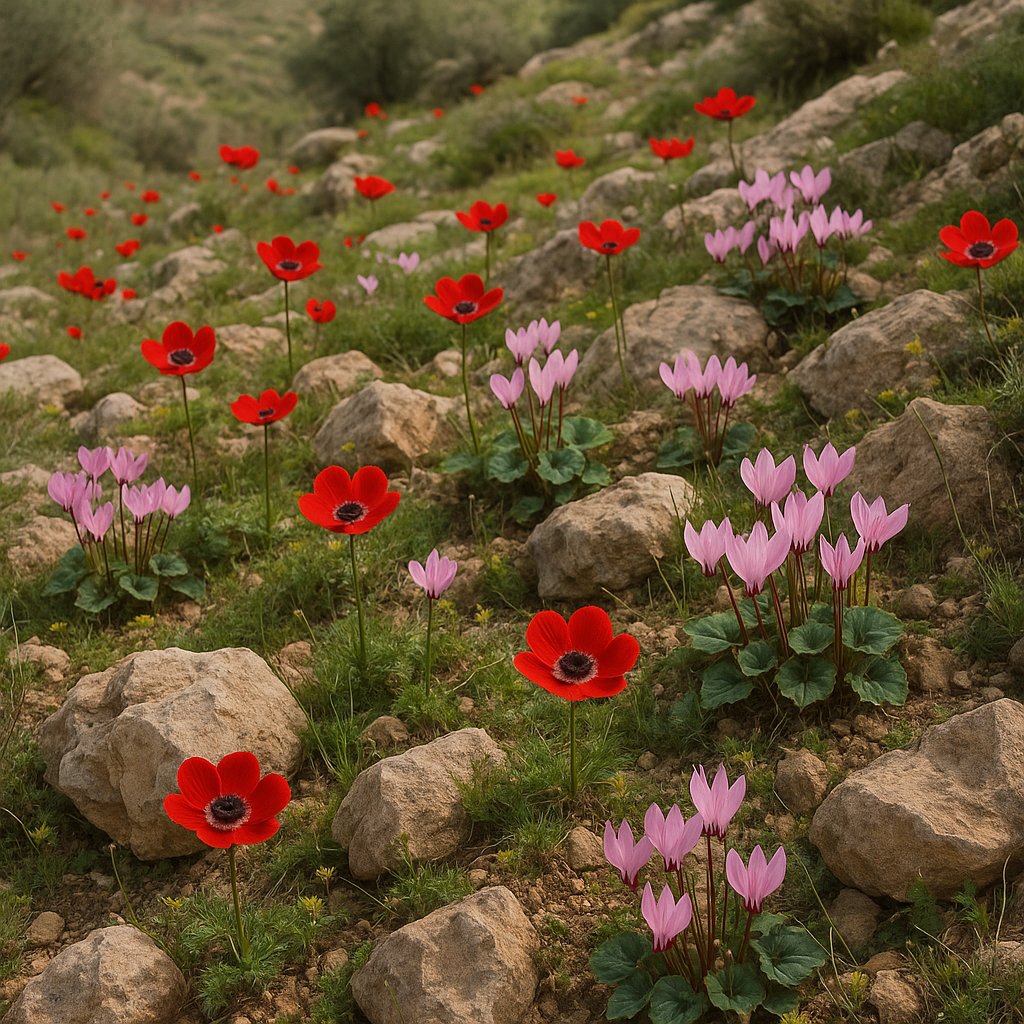
Walk a limestone terrace west of Jerusalem in late January and you might think nothing is happening. The ground is wet and gray, the pines are dark, and the stone walls look bare. Then you crouch down. A cyclamen leaf with silver marbling sits in a crack in the rock. A few steps on, a crimson anemone is open to the thin sun. The Judean Hills hold some of the Mediterranean’s most compact and rewarding wildflower seasons, and it begins much earlier than most visitors expect.
This guide follows the bloom month by month, from the first rains to the last dry-season flowers. It also covers where the plants grow and how to see them without harming them.
Why these hills flower so densely
The Judean Hills run from the Jerusalem area south toward Hebron. They are a patchwork of limestone, dolomite, chalky marl and pockets of terra rossa, the red clay-rich soil that collects in rock hollows. Rainfall is concentrated between November and March and runs roughly 20 to 28 inches a year around Jerusalem. The eastern slopes fall into the rain shadow of the Judean Desert, where the amount drops sharply.
That sharp gradient packs many habitats into a short distance. Garrigue, oak woodland, rocky terraces, abandoned farm plots and seasonal pools can sit within a few miles of each other. Many plants here are geophytes, meaning they store energy in underground bulbs, corms or tubers. They sleep through the hot, rainless summer and race through their cycle once the soil is wet again.
Winter: November to February
Cyclamen and the first color
The Persian cyclamen (Cyclamen persicum) is the signature flower of the hills. It starts in November and peaks in January and February. Pink to white petals sweep back from a dark-spotted mouth, and they grow straight out of crevices and shaded boulders. After pollination the stem coils like a spring and pulls the seed capsule down toward the ground. Look for it on north-facing rocks in oak and pine woods.
Autumn crocuses and early bulbs
Even before the main rains, Sternbergia opens its yellow goblets and several small crocuses appear. In my experience these are easy to miss unless you walk slowly and scan low. By January the hillsides also carry the tiny blue of Scilla and the green-white clusters of the wild narcissus, Narcissus tazetta, in damp hollows.
Anemones begin
The crown anemone (Anemone coronaria) starts blooming in late December in warm spots. It is the flower most people picture when they think of Israeli spring. Red is the most famous color, but purple, white and pink forms grow in the same meadow, and the mix changes from hill to hill.
Late winter to early spring: February and March
This is the busiest stretch. If you can pick only a few weeks to visit, aim for mid-February through mid-March. Here is what commonly shows up:
- Anemones: full carpets in open clearings and along forest edges.
- Ranunculus (Ranunculus asiaticus): Persian buttercups in red, orange, yellow and white, often growing with anemones.
- Tulips: Tulipa agenensis, a small red tulip with a black base, appears on rocky slopes.
- Irises: the black-and-purple Iris haynei and related species, protected and rare, grow in certain Judean sites.
- Almond blossom: wild and planted almonds turn whole slopes white and pale pink in late winter.
- Cistus (rockrose): pink Cistus creticus and white Cistus salviifolius start filling the scrub.
Orchids, the quiet specialists
Israel has over 30 orchid species, and many grow in the Judean Hills. Bee orchids (Ophrys) mimic the shape and scent of female insects to attract males. The bug orchid and the Galilee-area Orchis species prefer shaded, undisturbed soil. Orchids depend on soil fungi, so a trampled patch can take years to recover.
Spring: April and May
As the soil dries, the palette shifts. Red poppies (Papaver umbellatum) and yellow chrysanthemums fill fallow fields. Blue-purple bugloss, wild lupines, and the tall pink spikes of Salvia arrive. Thorny burnet and thyme-leaved shrubs flower on the garrigue, and the air starts to smell of sage and wild thyme. By late May, most of the geophytes are gone. Only dry-season specialists such as thistles and Echinops remain.
How to look without leaving a mark
Many Israeli wildflowers are legally protected, and picking them is prohibited. Even a small bouquet adds up when thousands of hikers pass the same trail. A few habits help:
- Stay on marked paths, especially near orchids and bulbs.
- Photograph from low angles instead of kneeling on plants.
- Go after a rain. Flowers open more fully on bright days following wet weather.
- Check local conditions, since bloom timing shifts by a couple of weeks depending on the year’s rainfall.
- Carry a regional field guide or a plant-ID app to confirm what you see.
Also pay attention to the security and access situation, as some areas in and around the West Bank have restrictions. Official park and nature authority sites are the safest sources for trail status.
A season worth planning around
The Judean wildflower year is really a relay: cyclamen in winter, anemones and ranunculus as the rains peak, orchids and irises in the shoulder weeks, and poppies as the hills dry out. Each stage lasts only a few weeks, and rainfall decides the details. If this has you curious, pick up a regional flora and learn three or four species before your first walk. You will start noticing the small things, and the hills will look very different from that gray January morning.