How to keep cut flowers fresh in a hot climate
Last July in Phoenix, I carried a bouquet of garden zinnias from the yard to the kitchen counter. It was 108°F outside. By the time I found a vase, the petals had already started to droop. Anyone who lives in Arizona, Texas, Florida, or the Southern California inland valleys knows the feeling: flowers that should last a week give up in two days.
Heat speeds up everything that makes a bouquet fade. Stems lose water faster, bacteria multiply in the vase, and the flowers’ own aging process runs on fast-forward. The good news is that a few small changes in handling can add days to a bouquet’s life, even in a house without much air conditioning.
Why heat is so hard on cut flowers
A cut flower has no roots, so it relies on the stem to pull water up to the petals. Warm air makes petals and leaves lose moisture through tiny pores faster than the stem can replace it. At the same time, warm water holds less oxygen and grows bacteria quickly. Those bacteria clog the stem’s water channels, and the flower wilts even though it is sitting in a full vase.
Ethylene is the third factor. This is a natural gas that flowers and ripening fruit release, and it triggers petal drop and early aging. Heat increases its effects. That is one reason a fruit bowl next to your bouquet is a bad idea in summer.
Start in the first hour
The first hour after cutting or buying flowers matters more than anything that comes later. Here is the routine I use:
- Bring a bucket to the garden. If you cut your own, early morning is best, before the sun has dried out the stems. Drop them into water right away.
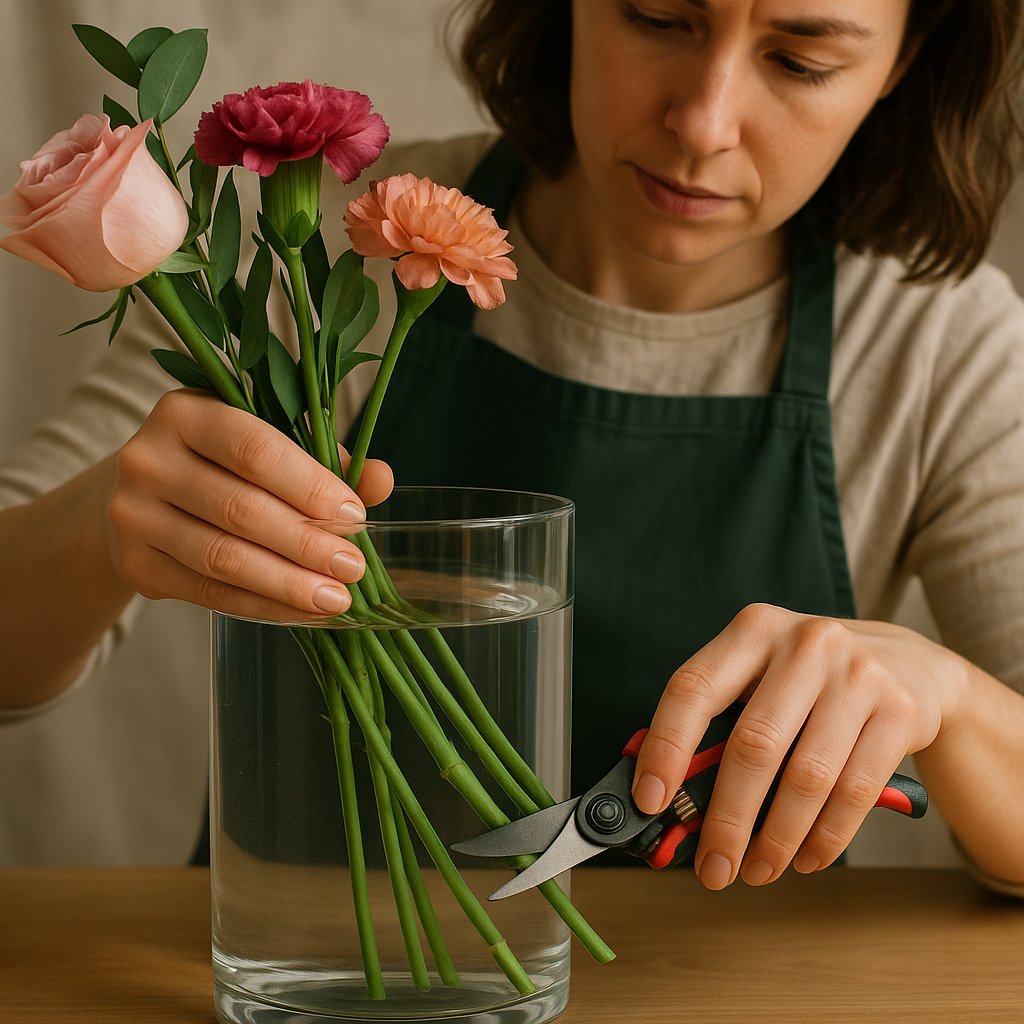
- Re-cut every stem. Use sharp shears or a knife, not dull scissors that crush the stem. Cut at an angle, about an inch off the bottom, and do it under water or right before the stem goes into the vase.
- Strip the lower leaves. Any leaf below the waterline rots and feeds bacteria.
- Use cool water. Lukewarm is fine for most flowers, but in a hot climate start with cool tap water. Bulb flowers like tulips and daffodils prefer it cold.
- Let them drink. Place the bouquet in a cool room for one to two hours before moving it to its display spot.
What to put in the vase water
The little packet that comes with store-bought flowers is worth using. It contains sugar for energy, an acidifier to help the stem take up water, and a biocide to slow bacteria. In a hot house, the biocide part does the heaviest lifting.
If you have run out of packets, a homemade mix works reasonably well. For a quart of water, try:
- 1 tablespoon of sugar
- 1 tablespoon of lemon or lime juice
- ¼ teaspoon of household bleach
The sugar feeds the flower, the citrus lowers the pH, and the bleach keeps the water cleaner. Measure carefully, because too much bleach damages stems. Skip the old tricks of dropping in a copper penny or an aspirin. Research on both is unconvincing.
Change the water every day if you can, and every second day at the longest. Rinse the vase with hot soapy water each time. A slimy film on the glass is a sign that bacteria are already winning.
Where you put the bouquet counts
Placement is the part people overlook. Keep flowers away from:
- Sunny windowsills, where glass can heat the water by several degrees
- Air conditioning vents and ceiling fans, which dry petals quickly
- Fruit bowls, because ripening produce gives off ethylene
- Appliances such as the TV, refrigerator top, or stove
A cooler interior room, a hallway, or a dining table away from windows is a better choice. For a dinner party or event, I move the arrangement into the fridge overnight if there is space. Florists keep their stock at about 34–40°F for good reason. Even a few hours of cold slows aging noticeably. Just keep the flowers away from produce in the fridge, for the ethylene reason above.
Choose flowers that handle the heat
Some varieties cope with high temperatures much better than others. Long-lasting options include:
- Chrysanthemums, which can last two weeks or more
- Alstroemeria (Peruvian lily)
- Carnations
- Zinnias and sunflowers, if they are conditioned well
- Lisianthus and statice
- Orchids, such as cymbidium or dendrobium
More delicate flowers like sweet peas, delphinium, and hydrangea tend to wilt quickly in heat. Hydrangea is the classic troublemaker. If one droops, submerge the whole flower head in cool water for 30 minutes, then re-cut the stem. I have rescued many that looked finished this way.
Small habits that add up
Mist petals lightly on dry days, but not roses or flowers prone to mold. Remove any bloom that starts to fade, since a dying flower releases more ethylene and can speed up its neighbors. Top up the water daily even when you are not changing it fully. A vase that is half empty by afternoon is common in a hot home.
A simple plan to remember
Heat shortens flower life, but you can fight back with clean tools, fresh cuts, cool and clean water, and a smart spot away from sun and fruit. Do these consistently and a bouquet that once lasted three days can often hold up for seven to ten. Try the routine on your next bunch of grocery-store flowers and compare it with how long the last one lasted. If you want to go further, look into the specific needs of your favorite varieties, since each one has its own quirks.