Spring wildflowers of the Holy Land: what blooms from February to April
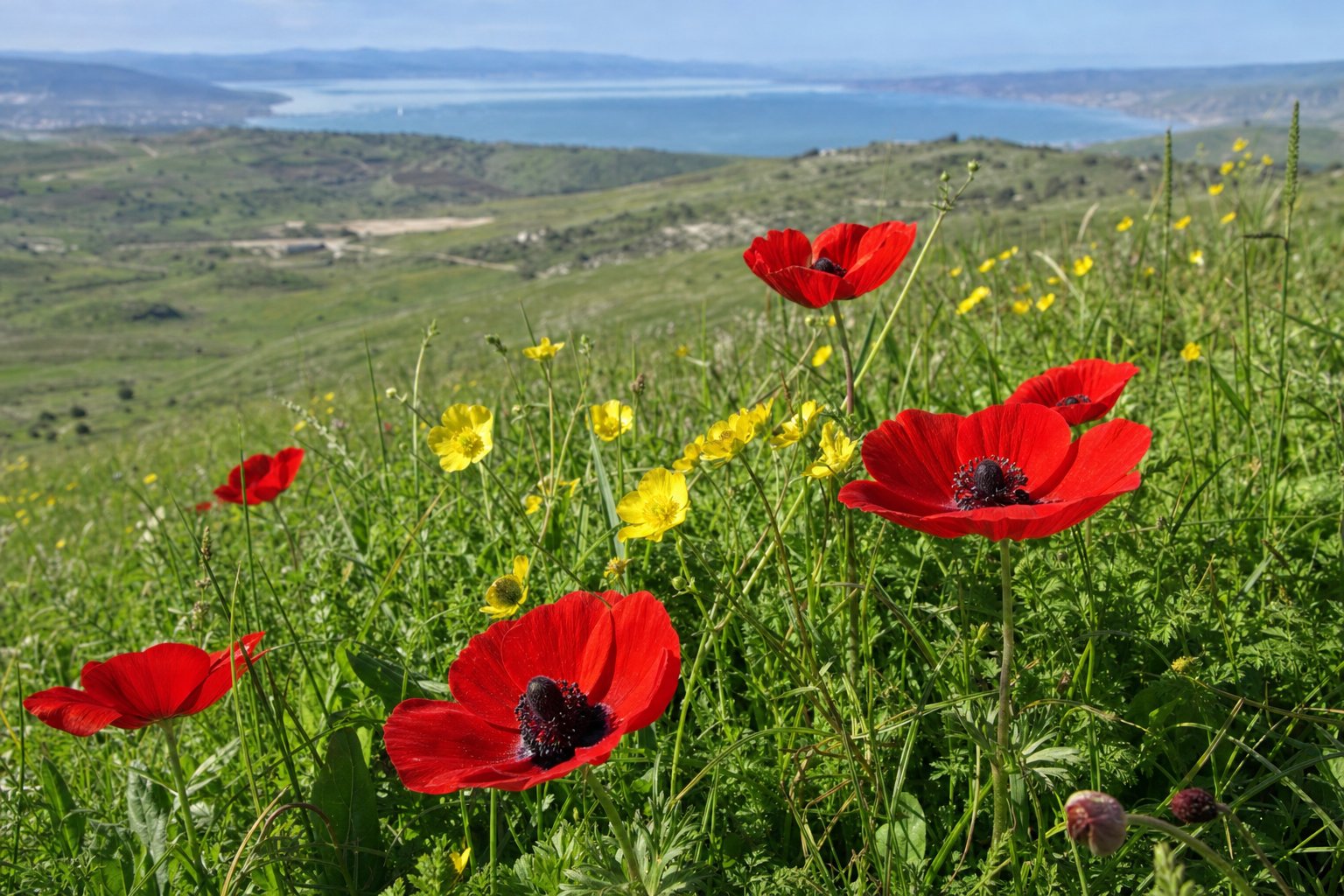
Picture a hillside in the Galilee in late February. Yesterday it looked brown and tired. This morning it is streaked with red, as if someone spilled paint down the slope. Those red patches are crown anemones, and they mark the start of one of the most generous wildflower seasons in the Eastern Mediterranean. The Holy Land is small, but it sits where three continents meet, and its climate runs from Mediterranean woodland to desert. The result is more than 2,500 plant species in an area about the size of New Jersey. Here is what actually blooms from February to April, where to look, and how to time a visit.
Why this tiny region flowers so wildly
The pattern depends on rain. Winter rains arrive between November and March, and the first real flush of flowers follows once the soil warms a little. A wet winter gives a thick carpet. A dry one gives a thin, patchy show, and some species skip the year entirely and wait as seeds.
Geography adds the second layer. The coastal plain, the central hills, the Negev and the Jordan Valley each have their own schedule. Warm low-lying areas bloom first. Higher ground such as the Upper Galilee and the Golan follows weeks later. That staggered timing is a gift for travelers, since a flexible itinerary can catch several peaks in one trip.
February: the opening act
February is when the season starts in earnest, mostly in the lowlands and the south.
- Crown anemone (Anemone coronaria). The signature flower of Israel, usually red, though purple, pink and white forms turn up. It peaks from late January to early March. The Shefela lowlands and the Lachish region are classic spots.
- Cyclamen (Cyclamen persicum). Pink and white, tucked into rocky crevices and shaded oak woodland. It starts blooming in winter and often continues into early spring.
- Almond blossom. Not a wildflower in the strict sense, but wild and naturalized almond trees put on pale pink clouds across the hills in late January and February.
- Winter crocus and sea squill. Small bulbs that appear on stony ground and coastal sands, easy to miss unless you are walking slowly.
March: the full spread
March is the heart of the season. Almost every habitat is active, and a single hike can yield twenty or thirty species.
- Persian buttercup (Ranunculus asiaticus). Red, orange, yellow or pink, often growing beside the anemones.
- Poppies (Papaver species). The common red poppy covers fields and roadsides, while the thin-petaled Papaver umbonatum gives bright scarlet splashes.
- Bellevalia and grape hyacinth. Blue and purple spikes among the grasses.
- Irises. The Iris haynei, sometimes called the Gilboa iris, is a deep purple, almost black, bloom found on Mount Gilboa. It is rare and protected, so look but do not touch.
- Rock rose (Cistus). Pink or white crinkled petals on shrubs in the Carmel and Galilee woodlands.
The desert has its own show
People often assume the Negev stays barren. In a good rain year it does not. March brings yellow carpets of desert marigolds, pink storksbill, purple Matthiola and the delicate white blooms of desert chamomile. These displays are brief, sometimes only two weeks, and they depend completely on a flash of rainfall. I have seen the same wadi look like a lunar landscape one March and a meadow the next.
April: the shift north and uphill
By April the lowlands are drying out and the color moves to higher elevations. The Golan Heights, Mount Hermon’s lower slopes and the Upper Galilee hold wildflowers well into the month. Expect:
- Orchids, including the bumblebee-like Ophrys species and the tall Anacamptis, in shaded Galilee and Carmel woodlands.
- Yellow Glebionis (crown daisy) and chamomile covering fields in thick sheets.
- Purple viper’s bugloss and blue anchusa along trails and field edges.
- Gladiolus and wild lupine in the northern hills.
The Golan’s basalt plateaus often glow yellow and purple in April, long after the south has turned golden brown.
Practical tips for seeing them well
Timing
Early to mid-March is the safest single window if you only have one trip. Check recent rainfall and local nature reports before you go. Israel’s Nature and Parks Authority and regional field-study groups post bloom updates each season.
Where to go
- Lachish and the Shefela for anemones.
- Mount Carmel and the Galilee for cyclamen, orchids and rock rose.
- Mount Gilboa for irises.
- The Negev, such as around Be’er Sheva and Mitzpe Ramon, for desert blooms after rain.
Etiquette
Many wildflowers are protected by law, and picking them can carry a fine. Stay on marked trails, because trampled bulbs may not return next year. A small hand lens and a field guide, or an identification app, will turn a pretty walk into a real discovery. Early morning light is also kinder to photos, and many petals open fully only after the sun warms them.
A season worth planning around
The wildflower season in the Holy Land runs on rain, elevation and a bit of luck. February brings anemones and cyclamen, March opens up everything from irises to desert marigolds, and April moves the show to the northern highlands. If you are planning a trip for 2026, build in a few flexible days and watch the winter rainfall. Then pick a regional field guide or a local nature society’s bloom calendar, and learn the names of five or six species before you land. You will notice far more on the trail, and the hillsides will feel a lot less like scenery and a lot more like a conversation.