How to plant a Mediterranean flower garden that thrives in dry summers
Every July, I watch the same scene play out in neighborhoods across the American West and South. Lawns turn the color of toast, hydrangeas wilt by noon, and gardeners drag hoses around at dusk trying to keep everything alive. Meanwhile, a patch of lavender, a clump of gaura and a few silvery santolina plants nearby look perfectly happy. That contrast is the whole idea behind a Mediterranean flower garden: plants that evolved with hot, rainless summers and treat them as normal, not as an emergency.
With water restrictions becoming more common in 2026 from California to Texas and Colorado, this style of gardening is practical as well as pretty. Here is how to plant one that holds up when the heat arrives.
Start with sun, soil and a realistic climate check
Mediterranean plants need three things above all: full sun, sharp drainage and air movement. Aim for at least six to eight hours of direct light. Less than that and you will get floppy stems and fewer blooms.
Check your USDA hardiness zone before shopping. Many classic Mediterranean plants, such as lavender, rosemary and rock rose, do best in zones 7 to 10. In colder zones, you can still make this work with hardier substitutes like catmint, Russian sage, hardy sages and sedum.
Pay attention to winter wetness, too. Gardeners in the Southeast and Pacific Northwest often find that damp winters kill these plants faster than summer drought does. Humidity and soggy roots are the real enemy.
Fix drainage before you plant anything
Here is a quick test: dig a hole about a foot deep, fill it with water, let it drain, then fill it again. If the second fill takes more than four hours to disappear, your soil needs help.
- Heavy clay: build a raised bed or a berm 12 to 18 inches high, using native soil mixed with coarse sand or pea gravel.
- Sandy or rocky soil: you are already ahead. Add a thin layer of compost only if the soil is truly depleted.
- Average loam: mound it slightly and skip the heavy amendments.
A common mistake is to enrich the soil the way you would for a vegetable bed. Rich soil produces soft, leggy growth and shortens the life of lavender and sage. Lean is better.
Choose plants that bloom through the heat
A dry garden does not have to be gray-green and sparse. The trick is to layer plants by height and bloom time so something is flowering from spring through fall.
A reliable plant palette
- Spring: rock rose (Cistus), Spanish lavender, creeping thyme, bearded iris, California poppy.
- Early summer: English and French lavender, salvia ‘May Night’, yarrow, catmint (Nepeta).
- Midsummer heat: Russian sage, gaura, coreopsis, blanket flower (Gaillardia), verbena bonariensis, agastache.
- Late season: sedum ‘Autumn Joy’, Mexican bush sage, ornamental oregano, germander.
- Silver and green structure: santolina, lamb’s ear, artemisia, rosemary, curry plant.
In my own experience, blanket flower and gaura are the unsung heroes. They bloom from June until frost with almost no attention, even when daytime temperatures sit above 95°F.
Lay it out so it looks intentional
Mediterranean gardens look best when they feel relaxed but not chaotic. Plant in drifts of three, five or seven rather than singles scattered around. Put taller, structural plants such as rosemary or Russian sage toward the back or center of an island bed, then step down to mounding plants and finally low creepers at the edge.
Leave room. Lavender can spread two to three feet, and crowding traps humidity around the foliage, which invites rot. Follow the spacing on the plant tag even if the bed looks bare the first year.
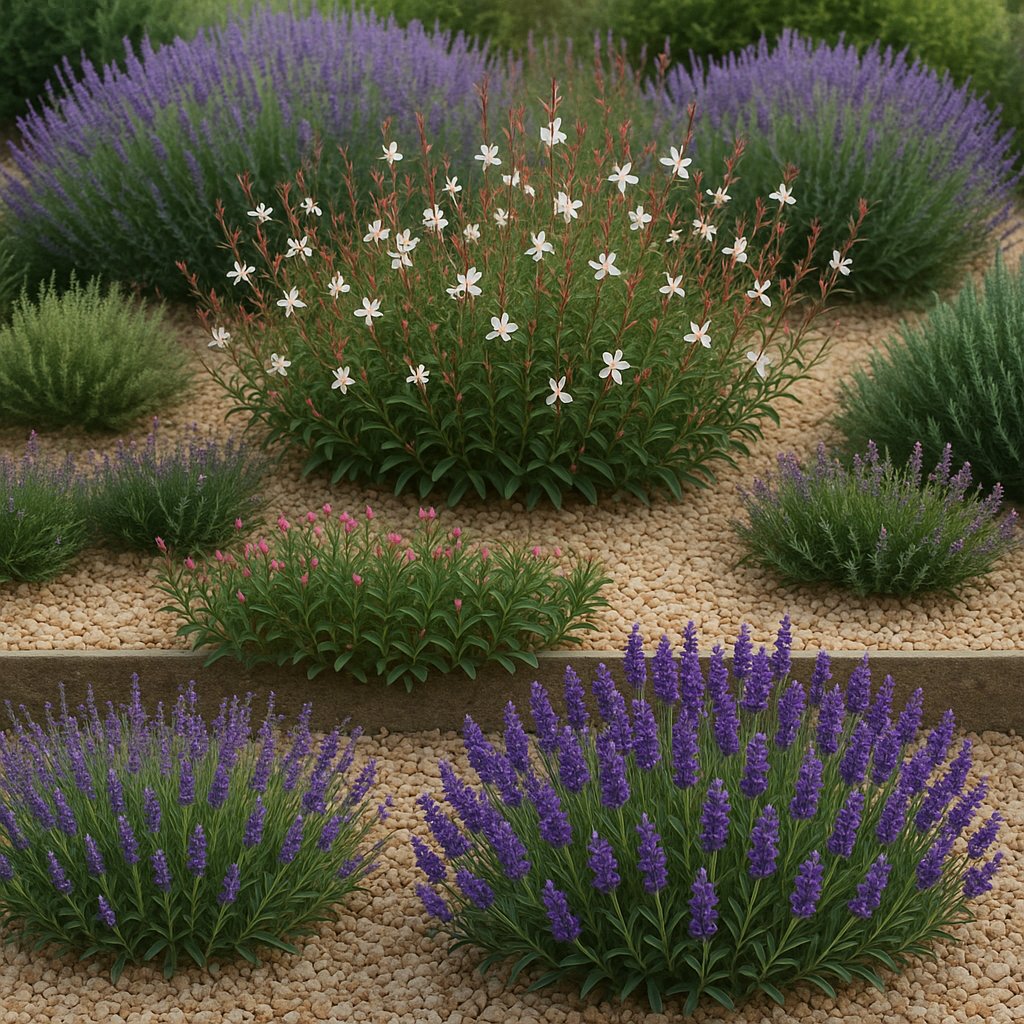
Use gravel, not bark, as mulch
Organic mulch holds moisture against the crowns of plants that prefer to stay dry. A one- to two-inch layer of pea gravel or crushed stone keeps weeds down, reflects light and lets the base of each plant dry out quickly. It also looks right with the style. Keep stones a few inches back from the stems of woody herbs.
Water smart: deeply at first, then rarely
Drought-tolerant does not mean zero water. New plants have small root systems and need help for the first season.
- Weeks 1 to 4: water every two to three days so roots settle in.
- Months 2 to 4: water deeply once a week, letting the soil dry between sessions.
- After the first year: water once every two to four weeks during extended heat, or not at all in regions with some summer rain.
Deep, infrequent watering encourages roots to chase moisture downward. Shallow daily sprinkling does the opposite and leaves plants dependent on you. Drip irrigation or a soaker hose is more efficient than overhead sprinklers, and it keeps leaves dry.
The best planting windows are fall and early spring, when cooler temperatures and natural rainfall let roots establish without stress. Planting in July is possible, but you will spend a lot more time with the hose.
Yearly care that keeps the garden thriving
- Prune after flowering: trim lavender by about one-third, cutting into green growth, never into bare wood.
- Skip fertilizer: a light spring top-dressing of compost is plenty.
- Cut back perennials in late winter: this refreshes salvias, catmint and Russian sage.
- Let some seed heads stand: goldfinches love coneflower and verbena, and self-sown seedlings fill gaps for free.
Expect to replace short-lived plants like lavender every five to eight years. That is normal, not a failure.
Your next step
You do not need to convert the whole yard at once. Pick one sunny, well-drained corner, test the drainage, and plant a small drift of lavender, gaura and blanket flower this fall. Watch how they behave through next summer, and let that guide what you add. If you want to go further, look into regional native plant lists from your state extension office, which often include Mediterranean-style natives that pair beautifully with the classics.